PRESIDENT
Todne Thomas
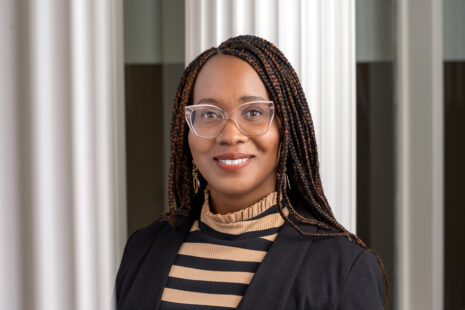
Thomas is a socio-cultural anthropologist and tenured professor. She holds a joint appointment at Yale Divinity School and Yale College. In collaboration with Afro-Caribbean and African American congregants, Thomas conducts ethnographic research on the racial, spatial, and familial dynamics of black Christian communities. Her scholarship and teaching explore intersectional constructions of power and critical forms of consciousness and practice that attend modalities of “the sacred.” Her forthcoming book From Hate to Hallows: Re-framing Black Church Arson (contracted with Duke University Press) examines the burning of a predominately black Seventh-Day Adventist Church in Knoxville, Tennessee in 2015. She argues that black church arson is an interpretive phenomenon that is best apprehended through local explanatory frameworks of religion, race, and hallowed ground.
Her book Kincraft: The Making of Black Evangelical Sociality (Duke University Press, 2021) locates a black evangelical community at the center of their own religious story, presenting their determined spiritual relatedness as a form of insurgency. Thomas argues that kincraft—the means by which church members construct one another as brothers and sisters in Christ—animates community life. Diligently genealogical, the book traces diasporic and religious antecedents of black evangelical kin-making. The ethnography accents congregants’ critical mobilizations of kincraft against normative denominational and nuclear family constructs, and some of the ethno-racial exclusions within US evangelicalism.
Thomas is also the co-editor of New Directions in Spiritual Kinship: Sacred Ties across the Abrahamic Religions (2017) with Asiya Malik and Rose Wellman. She has authored peer-reviewed articles for venues, such as the Journal of the American Academy of Religion, the Journal of Africana Religions, Anthropology and Humanism, and the Journal of African American Studies.
PRESIDENT-ELECT
Bianca C. Williams
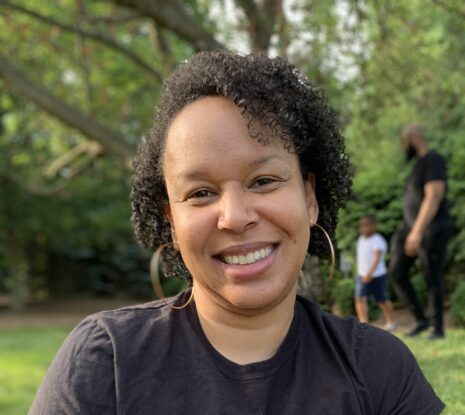
Bianca C. Williams (she/her) is an Endowed Chair in Race, Racism, and Racial Justice and the Matthew D. Branche Associate Professor of Africana Studies and Anthropology at Bowdoin College. She examines race, gender, and emotion in higher education and organizing communities, with a focus on Black women’s affective lives. She has written about Black women, travel, and happiness; “radical honesty” as feminist pedagogy; white supremacy, anti-Blackness, and campus activism within the Movement for Black Lives; and writing while anxious. Williams is the author of the award-winning book The Pursuit of Happiness: Black Women, Diasporic Dreams, and the Politics of Emotional Transnationalism (Duke U 2018), and co-editor of the volume Plantation Politics and Campus Rebellions: Power, Diversity, and the Emancipatory Struggle in Higher Education (SUNY 2021). Williams previously taught at the University of Colorado Boulder and CUNY Graduate Center, where she was the Faculty Lead for the Mellon- funded public humanities initiative called the PublicsLab.
SECRETARY/CO-TREASURER
Deneia Y. Fairweather
Deneia Y. Fairweather, Ph.D., is an applied cultural anthropologist whose work centers on the educational experiences and creative agency of African Diaspora communities. She holds a Ph.D. in Applied Cultural Anthropology from the University of South Florida, an M.Ed. in Reading Education, and Certified Professional Educator credentials from the State of Florida.
Dr. Fairweather is a Doctoral Lecturer at John Jay College (CUNY) and Galen University in Belize. Before higher education, she spent over fifteen years as an Instructional Coach, ESE Specialist, and Gifted educator in Tampa Florida. Her research documents the educational experiences of male adolescents across the African Diaspora—particularly in Belize, Brazil, and Florida—and reimagines learning systems from the learner’s perspective.
She founded ESE Consulting, LLC, which bridges academic research and community need through social science, art, and immersive technology. ESE houses AIM (Anthropology in Motion™), a global digital museum and curriculum (www.aim.center), and AIM-Quest, an AI-integrated mobile gamified learning application—both advancing her vision of African Diaspora youth as architects of digital culture.
She serves as Secretary and Co-Treasurer of the Association of Black Anthropologists, and splits her time between Tampa, the Bronx, and Belize. Contact: dfairweather@eseconsultinggroup.com | +1 8134215004
CO-TREASURER
Bertin M. Louis, Jr.
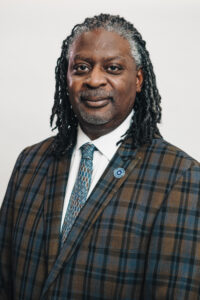
Bertin M. Louis, Jr. PhD is Associate Professor of Anthropology and African American & Africana Studies (AAAS) at the University of Kentucky. He is the winner of the 2023 Sam Dubal Memorial Award for Anti-Colonialism and Racial Justice in Anthropology from the American Anthropological Association (AAA). Louis is also the winner of the 2023-2024 Wenner-Gren Fellowship in Anthropology and Black Experiences (administered by the School for Advanced Research).
Bertin served as President of the Association of Black Anthropologists (a section of the AAA [2021-2023]), is a past Editor of Inside Higher Ed’s Conditionally Accepted column, a former contributor to Higher Ed Jobs, and a co-editor for the Truthout series called “Challenging the Corporate University.” Louis is also the co-author of the forthcoming Conditionally Accepted: Navigating Higher Education from the Margins (University of Texas Press, 2024).
Dr. Louis is also the owner and founder of Navigating Higher Education (NHE), an award-winning academic consulting firm which offers higher education-related services and empowers its clients to find and secure academic positions.
PROGRAMMING COMMITTEE
Jason Vasser-Elong (Co-Chair)
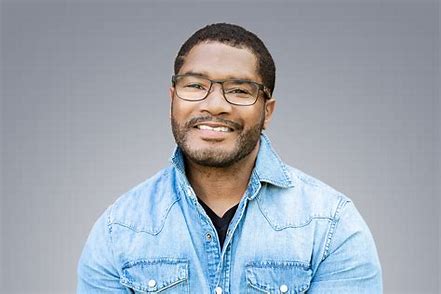
Dr. Jason Vasser-Elong is poet and auto-ethnographer who has been writing, publishing and producing art in the St. Louis Metropolitan area for over twenty years. He is the author of Shrimp (2Leaf Press, 2018) and has a new collection of poems Lavender forthcoming this year. Jason served as Poet – In – Residence for Sapiens, a publication of the Wenner-Gren Foundation and published in partnership with the University of Chicago Press. He has publications in poetry anthologies and academic journals, such as “Society for Cultural Anthropology” (2025), and others. Together with Christine Weeber and Margaret Noodin, he co-edited Indigenizing what is Means to be Human (2023).
He has been featured performing poetry for Music at the Intersection, in documentaries, “Never been a Time” (2019), “Poetry in Motion: St. Louis Poets Take the Mic” (2022) and has had poems on exhibit at the Saint Louis Art Museum as part of the “Living with Art: Community Cares” program and at the Griot Museum of Black History and Culture during its exhibit “Terang’ ART II: A Celebration of Art and Hospitality” (2024), “Black St. Louis Artists Explore Generations of Racial Trauma and How Joy Heals” (2021), others.
He is the director and educational strategist of his consulting company JNVE Consulting. More about his work can be found on his website jnicholasandco.com
COMMUNICATIONS COLLECTIVE
VP OF COMMUNICATIONS
Kaniqua Robinson
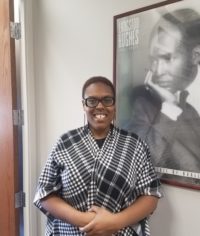
Kaniqua L. Robinson is an Assistant Professor in the Department of Anthropology at Furman University. Her research interests include politics of memory, race and the criminal justice system, Black feminism, racial politics of the U.S. South, and African American deathways. Dr. Robinson is currently working on her book manuscript based on her dissertation research (“The Performance of Memorialization: Politics of Memory and Memory-Making at the Arthur G. Dozier School for Boys), which investigates the politics involved in the memory-making processes of a state reform school in Marianna, Florida. She received her Ph.D. in Applied Anthropology (cultural) from the University of South Florida in December 2018. Dr. Robinson earned a M.A. in Anthropology and B.A. in English from Georgia State University.
Edward C. Davis IV
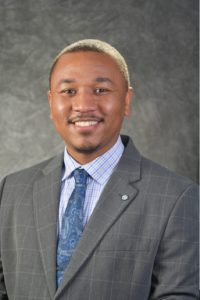
Edward C. Davis IV teaches African American Anthropology at Southland College Prep Charter High School in Richton Park, Illinois for dual-credit with Loyola University Chicago. For 8 years, Davis rebooted Africana and Anthropology at Malcolm X College as tenured faculty, Social Sciences Chair, and discipline liaison for City Colleges of Chicago. Davis became Mellon research scholar at the Margaret Walker Center at Jackson State University in Mississippi before his current post in Illinois. Davis earned an MPhil in Anthropology at University of Cambridge, and MA-PhD degrees in African Diaspora studies at University of California, Berkeley. His dissertation Beer, Blood, and the Bible: Economics, Politics, and Geolinguistic Praxis in Kongo-Ngola linked ancient Nubian pharmacological agronomics with postcolonial TV ads; centuries of uterine dynastic kinship in the Kongo Kingdom and Lunda Empire; and ethnolinguistic cultural restitution via Chokwe algorithmic lusona proverbs to restore global Native sovereignties. This research undoes the 1662 law of partus sequitur ventrem. In 1619, ancestors of his paternal grandmother’s own grandmother’s grandmother arrived in Virginia from Malanje, Angola. Davis takes pride in his Maroon DNA on the Illinois Trail of Tears in Underground Railroad homesteads. After working in Congo-Angola, Davis formed Uloño Geolinguistic Praxis Services, Inc. based on the Umbundu principle of intergenerational knowledge.
TRANSFORMING ANTHROPOLOGY EDITOR-IN-CHIEF
Christen A. Smith
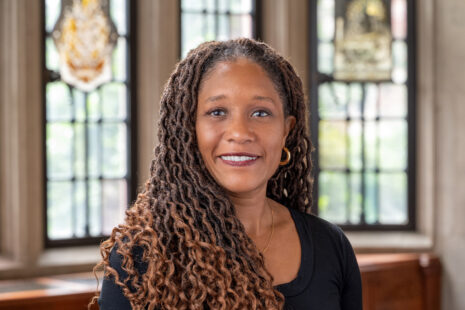
Christen A. Smith is co-editor of Transforming Anthropology and Associate Professor of Anthropology and African American Studies at Yale University. Her research focuses on the immediate and long-term impact of policing on Black people in the Americas–particularly as it relates to gender, space, and time–and Black women’s intellectual contributions to the Americas from the perspective of the global South. Smith is the author of Afro-Paradise: Blackness, Violence and Performance in Brazil (University of Illinois Press, 2016), co-author of The Dialectic is in the Sea: The Black Radical Thought of Beatriz Nascimento (Princeton University Press, 2023), and co-editor of
Black Feminist Constellations: Black Women in Dialogue and Translation
(University of Texas Press, 2023). Smith is also the author of over twenty peer revn iewed academic articles and essays, which she has published in various top academic journals, including Transforming Anthropology, in addition to her public-facing scholarship. In 2017, she founded
Cite Black Women.— a transnational movement that brings awareness to society’s gross tendency to ignore Black women’s intellectual contributions and not to cite Black women inside and outside of the academy.
Ryan Cecil Jobson
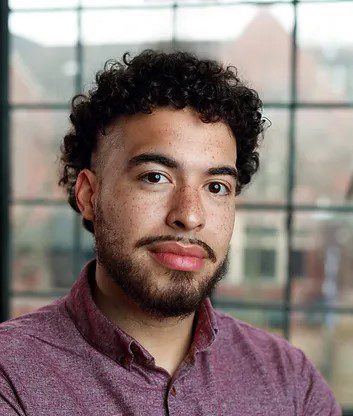
Ryan Cecil Jobson is co-editor of Transforming Anthropology and Neubauer Family Assistant Professor of Anthropology at the University of Chicago. His research and teaching engage issues of energy and extractivism, states and sovereignty, climate and crisis, race and capital.
His first book manuscript, The Petro-State Masquerade, is a historical ethnography of fossil fuel industries and postcolonial state building in Trinidad and Tobago. Excavating more than a century of commercial oil, gas, and petrochemical development, Jobson theorizes how the tenuous relationship between hydrocarbons and political power—enshrined in the hyphenated form of the petro-state—is upheld through a “masquerade of permanence” sustained by speculative offshore and deepwater extraction. Meanwhile, working class Trinbagonians play a mas of their own—in the form of strikes, protests, and the Carnival road march—to stage direct democratic alternatives to the fossil economy.
Jobson is at work on two subsequent projects: A collection of essays on climate change and the receding horizon of habitability in the Caribbean and a manuscript on anthropological theory and method in an era of climate extinction.
ARCHIVIST/HISTORIAN
Deborah Frempong
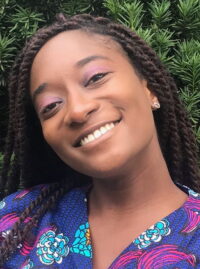
Debbie Frempong is a doctoral student in the anthropology department at Brown University. Her ethnographic project on colonial Christianity in Accra looks at the forms of womanhood that were institutionalized by several missionary churches in the mid-19th to early-20th century, and its subsequent effects on the current politics of gender and sexuality. Her more contemporary work looks at returnee women’s modes of belonging through their reintegration experiences in Accra, connecting questions about transnationalism, belonging, gendered subjectivities, and Christianity. Consequently, it explores how the gendered politics of reintegration produces and mediates ideas of modernity and (post) colonial subjectivities.
STUDENT INTEREST GROUP (SIG) REPRESENTATIVES
Yveline Saint Louis (Co-chair)
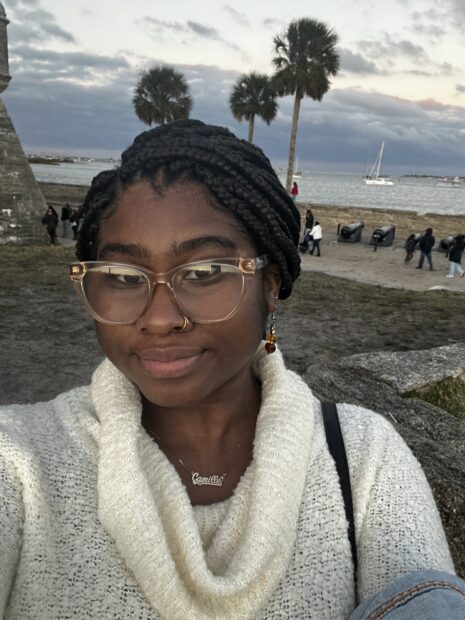
Yveline Saint Louis is a PhD student in Sociocultural Anthropology at the University of Washington whose interests sits at the intersections of Black feminist anthropology, Black agroecologies, and multimodal ethnography. Passionate about critical environmental studies, her research primarily engages with Black-led farming organizations in Seattle as movements to articulate and assert radical spatial imaginaries in an increasingly technocratic city. This research centers the collaborative efforts taken by BIPOC farmers, community gardeners, local food justice advocates, and more that turn to Earth-stewardship as radical future-making and resistance to neoliberal policies of enclosure.
As an avid dreamer and conjurer of stories, Yveline hopes to experiment with photography, poetry, film, and Afrofuturist writing to co-create stories that are grounded in the ways of knowing and being of those she is in community with.
In the Association of Black Anthropologists, Yveline serves as co-chair for the Student Interest Group and has thoroughly enjoyed connecting with other Black students that find resonance in anthropology and its methods. Outside of her studies, Yveline loves chilling at home with her cat Piper, practicing astrology & tarot, and learning to grow food with loved ones.
Aria Young-Vasquez (Co-chair)
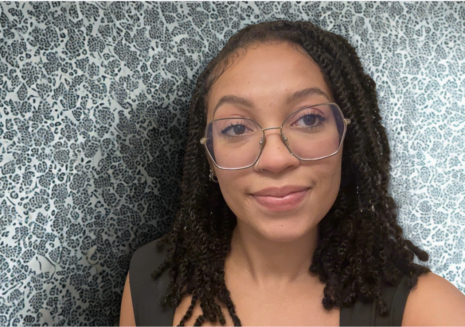
Aria is a graduate student at the University of Massachusetts, Boston studying under the Anthropology department in Critical Ethnic & Community Studies. As a Diaspora scholar and urban educator, Aria’s work specializes in Black childhood studies where her work focuses on Black domestic practice in the Anglo-Caribbean and in the Northern regions of South America.
As a trained anthropologist, some of Aria’s professional work has been informed by African Diaspora Archaeology, where her interrogations of space, confinement, and resistance have driven her interest in the interpretation of childhood enslavement and relational epistemologies. Through this lens, Aria is interested in studying how Black domestic practice of today is still influenced by the intersections of poverty, racialization, and Anti-Black politics in the present from a socio-cultural perspective.
Passionate about education and Black children’s access to care and community, Aria grounds her education style in culturally-relevant and accessible scholarship, relying on Black literature and creative writing to both teach and inform Black childhood studies in the present.
Aria is also the oldest of seven children, and in her free time enjoys trying new foods with her siblings and maintaining culinary traditions with her family.
ANTHROPOLOGY NEWS EDITOR
Pablo D. Herrera Veitia
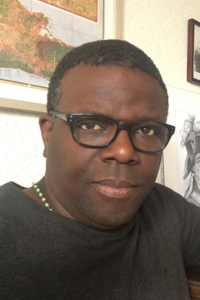
Pablo D. Herrera Veitia obtained his PhD in Social Anthropology from the University of St. Andrews. He is a scholar-practitioner working at the intersection of Orisa worship, hip hop studies and multimodal ethnography. His research explores what it means to be Afro-Cuban in post-socialist Havana and follows divinatory figures in the Odù Ifá literary corpus as primary conceptual sources. As one of Cuba’s pioneering Afro-Cuban rap music producers, Herrera Veitia proposes that understanding Afro-Cubaneity today may require a focus on recent shifts in the audible character of Havana and how the city’s sonorous dimension presents itself as a site where citizens contest state ideology through loud and discrete amplification practices. Herrera Veitia is a 2018-2019 Nasir Jones Fellowship recipient at the Hiphop Archive and Research Institute, Hutchins Center for African and African American Research, Harvard University. His writing has appeared in Revista Casa de las Americas, Metronome’s documenta 12 Magazines issue, and OkayAfrica.com. He has also collaborated on several major academic research projects on rap and reggaeton music in Havana, including Sujatha Fernandez’s Cuba Represent and Close to the Edge, Tanya Saunders’s Cuban Underground Hiphop; Marc Perry’s Negro Soy Yo; and Geoff Baker’s Buena Vista in the Club.
MEMBERS AT LARGE
Su’ad Abdul Khabeer
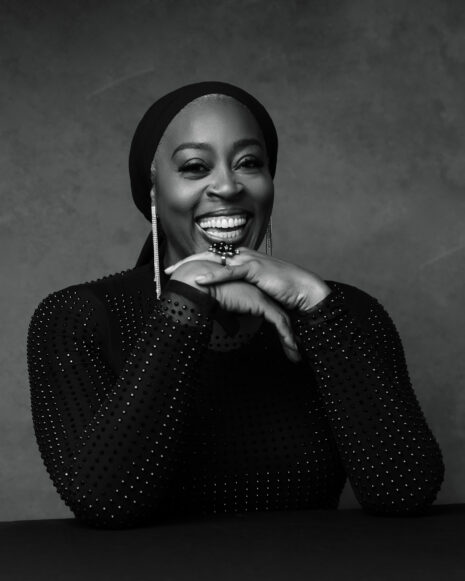
Su’ad Abdul Khabeer is a scholar-artist-activist. In her most recent work, she examines the intersections of official history and the untold stories of Black women and Black Muslims through the lens of her mother’s life. Umi means mother in Arabic, so she named the series of digital exhibitions Umi’s Archive. The project sees everyday Black women as people who know things we all need to know.
Trained as an anthropologist, Su’ad’s first book, Muslim Cool: Race, Religion and Hip Hop in the United States (NYU Press 2016), is a critically acclaimed ethnography on Islam and hip hop that examines how intersecting ideas of Muslimness and Blackness challenge and reproduce the meanings of race in the US. Su’ad’s written work on Islam and hip hop is accompanied by her performance ethnography, Sampled: Beats of Muslim Life. Sampled is a one-woman solo performance designed to present and represent her research and findings to diverse audiences as part of her commitment to public scholarship.
In line with this commitment Su’ad co-founded Sapelo Square, the first website dedicated to the comprehensive documentation and analysis of the Black US American Muslim experience. She has also written for The Root, the Washington Post, the Atlantic, Ebony Magazine, the Huffington Post, Religious Dispatches and Trans/Missions, and has appeared on Al Jazeera English. Additionally, Su’ad is a Senior Project Advisor for the US Public Television award-winning documentary, New Muslim Cool and her poetry was featured in the anthology Living Islam Out Loud: American Muslim Women Speak. In 2018, Su’ad was profiled as one of 25 influential American Muslims by CNN and received the Soros Equality Fellowship in 2019.
Su’ad is currently an associate professor of American Culture and Arab and Muslim American Studies at the University of Michigan. She received her PhD in cultural anthropology from Princeton University and is a graduate from the School of Foreign Service at Georgetown University and completed the Islamic Studies diploma program of the Institute at Abu Nour University (Damascus).
Lee Baker
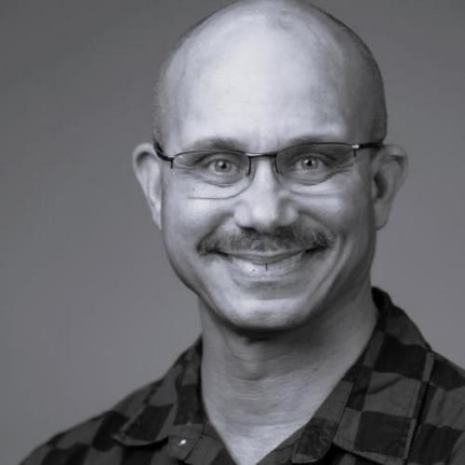
Lee D. Baker is Professor of Cultural Anthropology, and African & African American Studies at Duke University. He received his B.S. from Portland State University and doctorate in anthropology from Temple University. He has been a resident fellow at Harvard’s W.E.B. Du Bois Institute, the Smithsonian’s National Museum of American History, Johns Hopkins’s Institute for Global Studies, The University of Ghana-Legon, the American Philosophical Society, and the National Humanities Center. His books include From Savage to Negro: Anthropology and the Construction of Race, 1896-1954 (1998), Life in America: Identity and Everyday Experience (2003), and Anthropology and the Racial Politics of Culture (2010). Although he focuses on the history of anthropology, he has published numerous articles on such wide ranging subjects as socio-linguistics to race and democracy. Baker is also the recipient of Richard K. Lublin Distinguished Teaching Award. He served as Dean of Academic Affairs from 2008-2016.
David Kofi Mensah
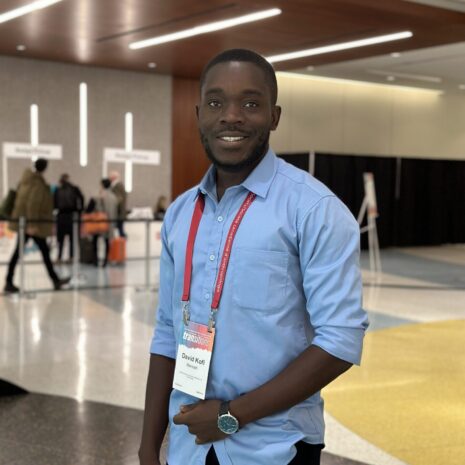
David Kofi Mensah is a doctoral candidate at Northern Arizona University and a Wenner-Gren Foundation Wadsworth International Fellow. He is a medical and cultural anthropologist interested in the social and behavioral aspects of mental health and drug addiction. His research looks at the influence of social dynamics and social structures on mental healthcare systems from a critical medical anthropology perspective. Specifically, his scholarship extends and adds to research on mental health and drug addiction stigma and health disparities among African populations in the Global South, specifically Sub-Saharan Africa and African American communities. He conducts research in Ghana and the United States. He is enthusiastic about the promotion of health equity through research and advocacy to stimulate policymaking for mental health and drug addiction in Sub-Saharan Africa and the African diaspora. His doctoral dissertation—a hospital ethnography at the Ankaful Psychiatric Hospital in Cape Coast, Ghana, examines the influence of social dynamics and social structures on mental illness stigma and their impact on the mental healthcare system in Ghana. He also holds a graduate certificate in culturally centered addiction research.
Journal of Linguistic Anthropology, The Oxford Handbook of Language and Sexuality (2022), Pedagogy, and Gender and Language. In addition to the Association of Black Anthropologists’ Executive Board, they sit on the Linguistic Society of America’s OMBUDS Committee and Committee on Ethnic Diversity in Linguistics. They previously served as a graduate mentor for the UCSB-HBCU Scholars in Linguistics Program. miles-hercules has been interviewed on linguistic issues for various news outlets, including Yahoo!, Vox, and VICE. They earned a BA in Linguistics, Anthropology, and African American Studies from Emory University, where they were a Robert W. Woodruff Scholar and Mellon-Mays Undergraduate Fellow. deandre is originally from Prince George’s County, Maryland, and currently based in Washington, DC.
AWARDS COMMITTEE CHAIR
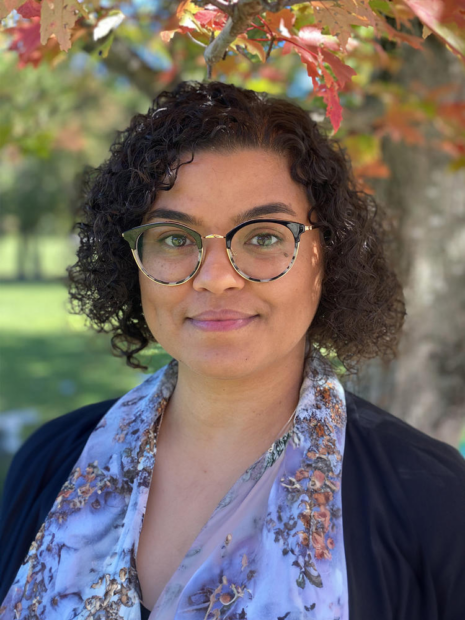
Hanna Garth
MENTORING PROGRAM
Darlène Dubuisson (Co-chair)
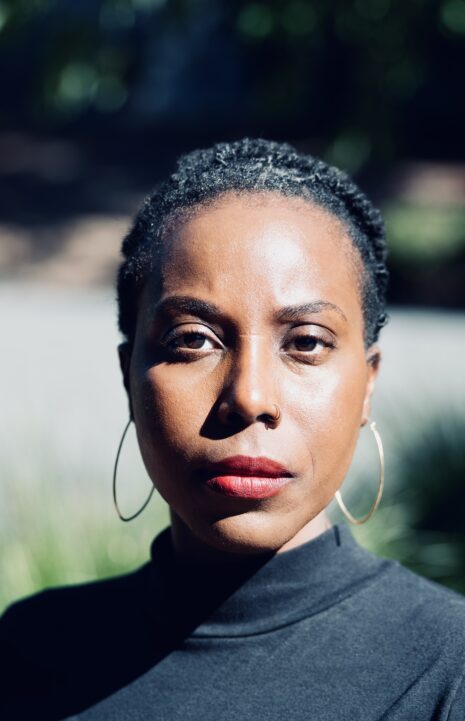
Darlène Dubuisson is an assistant professor of Caribbean Studies at the University of California, Berkeley, within the Department of African American Studies and African Diaspora Studies. A sociocultural anthropologist, Dubuisson’s research engages Black feminist theory, Black intellectual history, speculative fiction, apocalyptic anthropology, and migration and transnational studies. Her work examines how Black intellectual thought, migration, and feminist praxis intersect to shape public life, with a focus on the lived experiences and imaginative horizons of Black communities across the Americas, with an emphasis on Haiti and the Caribbean.
In 2022, Dubuisson received a Wenner-Gren Hunt Postdoctoral Fellowship to support the completion of her first book, “Reclaiming Haiti’s Futures: Returned Intellectuals, Placemaking, and Radical Imagination,” which was published in December 2024 by Rutgers University Press. The book received the SLACA (Society for Latin American and Caribbean Anthropology) Annual Book Prize and the Isis Duarte Book Prize. In addition, Dubuisson co-authored “Legalized Inequalities: Immigration and Race in the Low-wage Workplace,” published in 2025 by Russell Sage Foundation Press.
Her current research project concerns Black flight and aspiration in Mexico City.
Corliss Heath (Co-chair)
Corliss D. Heath is a Health Scientist in the Division of Policy and Data (DPD) at the Health Resources and Services Administration (HRSA)/HIV/AIDS Bureau in Rockville, MD. There she leads and coordinates various projects, while providing guidance, evaluation, implementation, and training to assure the provision of high-quality HIV intervention, care, and treatment services to people with HIV. Corliss D. Heath has nearly 30 years of professional experience in public health research. She is a graduate of Clark Atlanta University with a Bachelor of Science degree in Mathematics and a graduate of Emory University with a Master of Public Health degree in Biostatistics and a Master of Divinity degree, respectively. She also holds a PhD in Applied Anthropology specializing in Medical Anthropology from the University of South Florida (USF) (Tampa, FL). Her research interests include HIV intervention and care, mental health, religion and culture, women’s health, black feminist/womanist theory, and health inequities and inequalities.
VACANCIES
- Co-editor for Anthropology News
- Additionally, all committees are often looking for members. Contact the chair if you are interested in being a part of that committee.